Besieged health care workers in war zones need our solidarity, says doctor
Health care is increasingly under attack in war zones, despite this being in clear violation of international law. Doctors, nurses and other health care workers have been beaten, arbitrarily arrested, kidnapped, tortured, and killed. Hospitals and ambulances have been deliberately attacked.
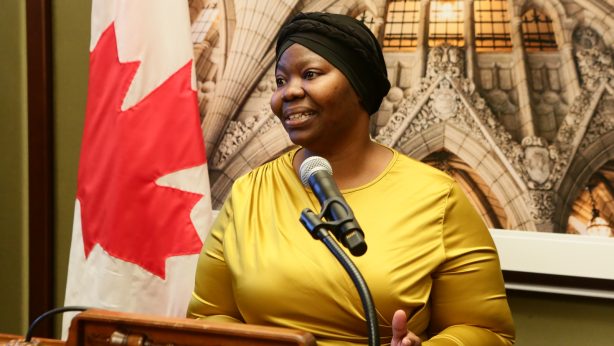
Dr. Yipeng Ge, Dr. Safa Elhassan, Sonal Marwah and Michael Lynk joined the Canadian Health Coalition’s Anne Lagacé Dowson for a conversation about health care workers in war zones on Monday, November 24. The webinar is now available for viewing here:
The international community has failed, says Dr. Yipeng Ge
Dr. Yipeng Ge has worked as a volunteer medic in multiple primary care clinics in Gaza. He noted that since 2007, Israel’s blockade of Gaza has meant that vital medical supplies such as stethoscopes have not been allowed into the Gaza Strip. Dr. Ge has worked with the Glia Stethoscope Project that prior to October 7, 2023, were printing 3D stethoscopes.
Dr. Ge described Gaza as a place denied basic pain medication and antibiotics as well as decent shelter, nutritious food, and clean water.
“You could see kilometres upon kilometres of these stretches of trucks with the necessary things that are required for life that were being denied at the borders and actually continue to be denied. They have been denied since Israel’s illegal siege and blockade of the Gaza Strip began in 2007,” said Dr. Ge.
The primary care clinics where Dr. Ge worked no longer exist. He said sites of healing are now morgues, “to store dead bodies from multiple massacres that happened over the course of last year and this year.”
Dr. Ge recalled the official reports of patients, young children, dying of forced starvation, severe malnutrition. He said, “people were eating bread made of animal feed and were eating grass. You have this waxing and waning of famine conditions over the past 2 years. And it took the international community until earlier this year to call a thing for what it is, famine. To call a thing for what it is, genocide.”
“The international community has utterly failed to prevent these man-made atrocities because of an illegal Israeli siege, but also the indiscriminate targeting and killing of the entire population, civilian population, but also the targeting of specific buildings and people, namely health care, where we saw hospitals be repeatedly attacked and besieged.”
After describing a horrific attack on the Nasser Hospital in Gaza, Dr. Ge called on health care workers in Canada to extend solidarity to health care workers all over the world and to support the end of institutional support for the ongoing genocide in Gaza.
“We have reports from physicians, nurses, and surgeons, and care workers because they wear scrubs or because they wear a white coat, they’re singled out by the Israeli forces when these hospitals are besieged,” said Dr. Ge.
Two-year war has left Sudanese without health care
Dr. Safa Elhassan is an obstetrician and gynaecologist from Sudan who now lives in Amherst, Nova Scotia. She described the devastating two-year war in Sudan that has destroyed hospitals and health care infrastructure in the country. She noted the shortage of essential drugs, saline and blood.
“Health care professionals are also not in Sudan now. They have fled the country for their safety or their children’s safety,” said Dr. Elhassan who went on to recount missile attacks on hospitals and killings of health care workers in Sudan. She described surgeons being forced to do surgery under missile attacks. A senior obstetrician she knows is missing.
Dr. Elhassan added that the Sudanese are dealing with dengue fever and malaria while also trying to survive displacement. “This is a humanitarian crisis and the war needs to be stopped. The people in Sudan, they deserve all the best things.”
Inter Pares, a member of the Canadian Health Coalition, is asking people to send a letter to Foreign Affairs Minister Anita Anand to demand Canada apply pressure on the U.A.E. to stop aiding and abetting war crimes in Sudan.
Sudanese solidarity is saving countless lives, says humanitarian worker
Sonal Marwah also spoke at the webinar. She recently returned from a 11-month humanitarian assignment in Sudan with Médecins Sans Frontières (MSF).
“What struck me most during my time in Sudan was the sheer scale of the disaster,” said Marwah. “I’ve yet to meet a single Sudanese individual at home or abroad who has not been affected.”
Marwah said her time in Sudan was marked with frequent attacks on MSF’s facilities. She referenced the World Health Organization’s condemnation of the killings of 460 patients and their caretakers at the Saudi Maternity Hospital in El Fasher on Oct. 28.
Marwah gave an overview of the conditions that led to the war and famine in Sudan before turning to its toll: an estimated 150,000 people dead and nearly 12 million displaced since the war began.
“The UN calls this the world’s largest displacement crisis and no doubt these numbers are staggering but behind each of them is an individual and a family tragedy that Sudanese are enduring,” said Marwah.
“The generosity and courage of Sudanese people extend long traditions of solidarity, and this has taken multiple different forms, whether that’s community kitchens or doctor’s networks that have saved countless lives. I’d like to pay special tribute to our Sudanese colleagues for all that they have done in this brutal war,” said Marwah.
Marwah shared a testimony of a Sudanese nurse about the psychological impact of the war. The nurse shared, “When my mother messages me on WhatsApp, and if I don’t reply soon, she starts crying, thinking I’m no longer alive. This is not a normal reaction.”
Marwah described the heightened risks for female medical personnel and the UN reports on widespread sexual violence across Sudan, particularly in the RSF-controlled areas. “Some local health care staff had reported that they were either afraid or reluctant to treat such survivors or even to file medical reports. And this was because of fear of retaliation, especially as they lived amongst those that were controlling these areas,” said Marwah.
Attacks on health care system are not extraordinary tales, says former UN Rapporteur
Michael Link, professor emeritus in the Faculty of Law at Western University, and former United Nations Special Rapporteur on the situation of human rights in the Palestinian Territory, returned to the topic of Gaza.
“The protection of hospitals, protection of the sick and wounded and the protection of health care workers are all fundamental to two important pieces of international treaties. One is the 1949 Geneva Conventions which is the beating heart of international humanitarian law which is the law of war and the law of occupation. It’s also at the very heart of the 1998 Rome statute which created the international criminal court and which reiterated the protection of hospitals, the protection of the sick and wounded and the protection of health care workers,” stated Lynk.
“Speaking specifically with respect to Gaza, there’s been somewhere close to 400 health care workers have been killed over the course of the two years of the Israeli genocide on Gaza. According to the World Health Organization, hundreds more have been arrested by the Israeli Defense Forces and they remain imprisoned in Israel,” continued Lynk.
Lynk spoke about one incidence that involved the killing of 15 health care workers when ambulances were attacked by the Israeli Defense Forces in March 2025 in Gaza. Israel denied they attacked ambulances but video evidence showed otherwise.
Lynk went on to explain the “burying of credible allegations of the killings of journalists, the killings of humanitarian workers, the killings of health care workers. The self-investigations by the Israeli military do not lead to any form of meaningful accountability.”
Lynk talked about the double tap strike on the Nasser Hospital. The attack began with two precise tank missiles hit the side of Nasser Hospital, initially killing five journalists and health care workers. When humanitarian workers and health care workers came to rescue those who had been shot, nine minutes later, Israeli tanks fired two more missiles, hitting the exact same spot, killing another 17 people.
“So in total, five journalists, four hospital staff, a final year medical student, a firefighter and other rescue workers were killed in these Israeli strikes. And there were another 50 people who were injured, including patients in the hospital who were hit as a as a consequence of these missile strikes,” said Lynk.
Lynk noted that, according to the World Health Organization, over 700 strikes have been recorded over two years, from October 2023 to October 2025, on hospitals in Gaza by the Israeli defense forces.
“These attacks were illegal. They would probably amount to war crimes both under the Geneva Conventions and under the Rome Statute of 1998. And this, I’m afraid, is not simply two extraordinary tales from the attacks on a health care system. These are two fairly typical stories with respect to how Israel regarded the immunity that hospitals are supposed to enjoy.”
Stay tuned for more webinars from the Canadian Health Coalition. Past webinars can be watched on our Youtube Channel.