New Brunswickers lobby for pharmacare as government reveals private health insurance interference
Pharmacare advocates lobbying New Brunswick cabinet ministers this week have provoked a response from government that speaks to the power of the private health insurance industry.
New Brunswick Health Minister John Dornan told the New Brunswick Health Coalition and Canadian Health Coalition in a Saint John Liberal Caucus meeting on Monday that the health insurance industry may respond to pharmacare in New Brunswick by getting rid of private coverage for Ozempic, a medication used to lower blood sugar levels for people with Type-2 diabetes. And, if they did so, the province would be left with a $60 million gap in coverage because Ottawa does not currently plan to cover that medication.
“What we understand is that [insurance companies] are threatening to not cover Ozempic for private plan holders, which would force the provincial government to shoulder that burden,” Steven Staples, National Director of Policy and Advocacy of the Canadian Health Coalition, told the NB Media Co-op.
The provincial government currently provides limited public coverage for Ozempic but it’s not on the list of medications that Ottawa says it will cover as part of its pharmacare deals with provinces and territories.
“The insurance companies are trying to strong-arm the government to stay out of the diabetes medication area,” Staples told the NB Media Co-op.
The Liberals promised free contraceptives in their 2024 election platform but has said little on diabetes coverage until now.
“While we support the principle of national pharmacare, the current federal proposal does not align with New Brunswick’s well-established and effective system,” the province said in a statement to the Telegraph-Journal.
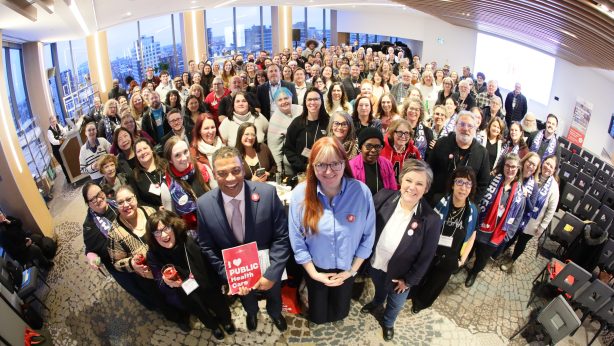
The government comments are in response to a media conference organized by the health coalitions on Monday that announced this week’s effort to press the New Brunswick government to sign a pharmacare deal with Ottawa.
Jean-Claude Basque, co-chair of the New Brunswick Health Coalition, disagrees that the province has effective drug coverage. He told CBC, “New Brunswick’s drug plan has annual premiums of $60 to $2,700 dollars, plus co-pays, depending on a person’s income.”
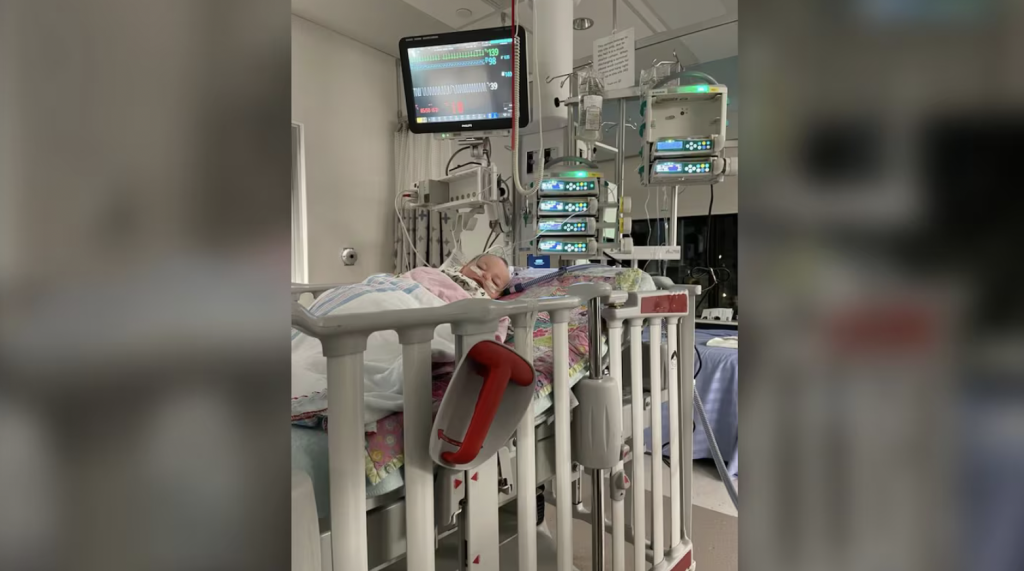
New Brunswick resident Scott MacMillan got emotional when talking about how his daughter Rosie was airlifted to hospital when she was diagnosed with Type-1 diabetes as a toddler.
“She was fighting for her life and nearly died when she was 15 months old due to diabetes,” he said, as reported by CTV.
“This was a moment that we realized that Canada’s health care system is truly not universal,” he said, noting that life-sustaining treatments for Type-1 diabetes can cost upwards of $18,000 per year.
Sophie Lavoie of Reproductive Justice NB said the group wrote to Premier Holt in March, asking for the province to negotiate a pharmacare deal that includes contraceptives and diabetes medication.
“We join with Action Canada for Sexual Health and Rights in being guided by the belief that everyone, regardless of where you live, what job you have, or what’s in your bank account, should have the ability to make autonomous decisions about their health and reproduction. Pharmacare legislation represents a major step forward for sexual and reproductive health and rights in Canada,” said Lavoie.
Lavoie added that the current lack of universal coverage in New Brunswick contributes to issues including unwanted pregnancies and costly hospitalizations.
Today, the Telegraph-Journal is reporting that the Progressive Conservatives and Greens are calling “the Holt government’s reluctance to sign a pharmacare deal with Ottawa because of its implications on the cost of diabetes drugs, describing the province’s recent comments as ‘incomprehensible’ and ‘shameful.’”
“It is incomprehensible that a government spokesperson told the media their priority was limited to securing funding for contraception, but not for diabetics,” Green Party Leader David Coon said in a press statement.
Coon added that more than 100,000 New Brunswickers live with diabetes, a number that’s expected to increase another 30 per cent in the next 10 years.
Three provinces and one territory — Manitoba, B.C., P.E.I. and Yukon — have inked pharmacare agreements with Ottawa since the Pharmacare Act became law last October.
A 2024 Environics poll revealed that New Brunswickers are among those who stand to benefit the most from pharmacare. Twenty-four per cent of New Brunswickers polled said they are not filling/renewing their prescription, or they are making it last longer (e.g., skipping doses, splitting pills) due to cost – the highest in Canada. Twenty-seven per cent said they hesitated about quitting/ changing jobs because of worries about losing prescription drug coverage – the highest in Canada.
Advocates are pointing out that New Brunswickers are not the only ones to suffer if the provinces does not include universal diabetes coverage as part of a pharmacare deal. They worry that it would set in a motion an erosion of the national plan with other provinces likely to follow suit.
According to New Brunswick’s Lobby Registry, several pharmaceutical companies and private health insurance companies have met with the Health Department since pharmacare became law last October.
The lobby comes as pressure from Friends of Medicare in Alberta and the Canadian Health Coalition outside the national Liberal Caucus in Edmonton resulted in Prime Minister Mark Carney confirming last week that his government is committed to signing more pharmacare deals with provinces and territories.
Staples told CBC he is hopeful New Brunswick will become the fifth jurisdiction to sign a pharmacare deal. “I think New Brunswick can get a good deal.”