
Canadian Health Coalition
  • Donate

    The form is not published.

  • Menu Canvas
    • Home
    • About us
      • Our Team
    • News
    • Campaigns
    • Take action
    • Ways to Give
      • Give one-time
      • Become a monthly donor
      • Leave a gift in your will
      • Make a tribute donation
    • Contact
    • Donate
  • hello@healthcoalition.ca
  • 343-558-1788
Donate | Subscribe
    • English
    • Français (French)
Canadian Health Coalition
  • Home
  • About us
    • Our Team
  • News
  • Campaigns
  • Take action
  • Ways to Give
    • Give one-time
    • Become a monthly donor
    • Leave a gift in your will
    • Make a tribute donation
  • Contact
  • Donate

Long-term care survey says “no” to for-profit care, and “yes” to better working conditions

Homepage Analysis Long-term care survey says “no” to for-profit care, and “yes” to better working conditions
Analysis

Long-term care survey says “no” to for-profit care, and “yes” to better working conditions

October 13, 2021
By CDN Health Coalition
0 Comment
3034 Views

The results of the inaugural survey of the Health Standards Organization (HSO) on Long-Term Care in Canada have been released, and its findings reflect many of the recommendations made by the Canadian Health Coalition (CHC) in its July submission to the survey.

By Pat Van Horne, USW member of the CHC Board of Directors
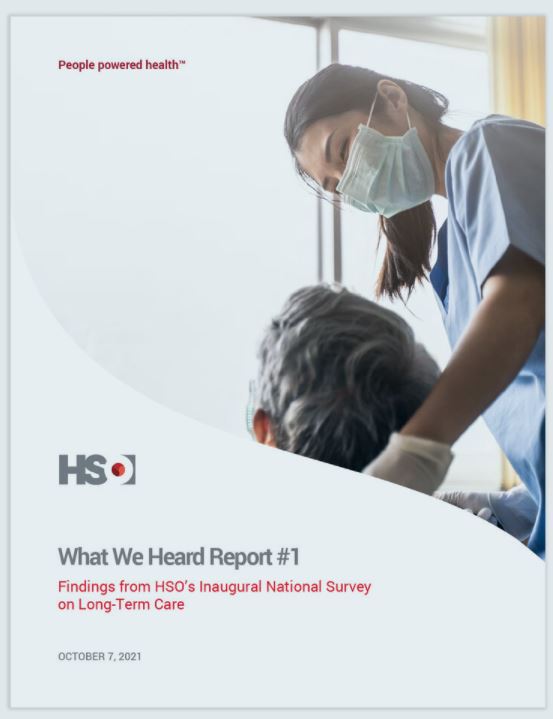

The report was prepared by the National Institute on Ageing (NIA), and summarizes the more than 16,000 responses the HSO received to inform its forthcoming new National Long-Term Care Services Standard for Canada.

For-profit care a top concern

The report notes that, “many survey respondents felt that abolishing for-profit long-term care was the most important issue to address within LTC,” which reflects a central concern of the CHC. This is clearly unfinished business in the quest for improved long-term care across Canada.

Chief among other CHC’s recommendations that are reflected in the report are related to the working conditions and environment for front-line workers in long-term care.

“When it comes to maintaining a ‘healthy and competent workforce’ in LTC, the majority of survey respondents stated the immense importance of ensuring a workplace culture in which staff are respected, valued and empowered,” said the report. 

It quotes a comment by CHC Board member, Dr. Pat Armstrong; “Conditions of work are conditions of care.” 

Dr. Armstrong also serves as a member of the HSO’s National LTC Services Technical Committee.

“Pay them well. Show them the love they have shown during their careers as caregivers. Make their jobs good, secure positions that assure them and their families that they are appreciated,” said a survey participant. In line with the CHC, the report’s authors also define job security as ‘full-time, permanent employment that is equitably compensated (e.g. wages, benefits, pensions, paid time off) for expertise and skills . . .”

Addressing systemic racism in health care, including long-term care, is a priority for the CHC.

“Cultivating a culture that is free from harassment (e.g. bullying) and discrimination . . .” was a finding from the survey. More than 99 per cent of respondents said absolutely “yes” to the need for national standards to replace the patchwork of policies that exist across Canada.

What is next

The HSO says that the survey results will inform the questions that the Technical Committee is now asking in its next phase of public consultation. The non-profit organization is promoting its National LTC Services Standard Consultation Workbooks, which can be completed by anyone interested in providing their input. These steps, including town halls, are expected to lead to new national LTC standards to be released for review in early 2022 and then completed in the fall of 2022.

The full report, What We Heard Report #1: Findings from HSO’s Inaugural National Survey on Long-Term Care, is available at https://longtermcarestandards.ca/engage


Tags: Long-term Care

Previous Story
Two good reasons to oppose unconditional health care money for provinces
Next Story
Frontline workers to discuss mental health during the pandemic

Related Articles

Caring for care: Pat Armstrong and Hugh Armstrong talk about 'the conditions of work are the conditions of care'

Two of Canada's foremost thinkers on health care, Pat Armstrong...

Caring for care: A conversation with Pat Armstrong and Hugh Armstrong

Join the Canadian Health Coalition’s Anne Lagacé Dowson in conversation...

Recent Posts

  • Canadian Health Coalition remembers Stephen Lewis Apr 2, 2026
  • The story of Nell Toussaint: Challenging Canada’s violation of the human right to health care Mar 31, 2026
  • Ban paid plasma and end Grifols contract, say health care advocates Mar 31, 2026
  • Thousands rally nationwide to urge federal action on Alberta’s two-tier health care law Mar 18, 2026
  • Canadian Health Coalition calls for the shutting down of all for-profit, private plasma centres Mar 13, 2026

Tags

Canada Health Act Canada Health Transfer Canadian Health Coalition COVID-19 Dental Care Federal Election 44 Federal Election 45 Health+Hope 2025 Health Care Workers Health equity Health Policy Home care Long-term Care Medicare Mental Health Pharmacare Plasma Privatization Racism Reproductive Health Care Sexual and reproductive health and rights Solutions series Substance use care Toxic drug crisis
Canadian Health Coalition
2841 Riverside Dr.
Ottawa, Ontario K1V 8X7
+343.558.1788
hello@healthcoalition.ca
  • Home
  • About Us
  • Campaigns
  • News
  • Contact
SearchPostsLogin
Thursday, 2, Apr
Canadian Health Coalition remembers Stephen Lewis
Tuesday, 31, Mar
The story of Nell Toussaint: Challenging Canada’s violation of the human right to health care
Tuesday, 31, Mar
Ban paid plasma and end Grifols contract, say health care advocates
Wednesday, 18, Mar
Thousands rally nationwide to urge federal action on Alberta’s two-tier health care law
Friday, 13, Mar
Canadian Health Coalition calls for the shutting down of all for-profit, private plasma centres
Thursday, 12, Mar
March 16 is the Day of Action for Public Health Care

Welcome back,