Watch Against Racism, For Health Equity: A Research Roundtable
Canada’s most eminent scholars, medical doctors and health practitioners shared their research on systemic racism in health care at the Against Racism, For Health Equity: A Research Roundtable at the University of Ottawa on Oct. 29, 2026. The roundtable was organized by the Canadian Health Coalition and the University of Ottawa Centre for Health Law, Policy and Ethics.
The roundtable is now available for viewing here:
Jason MacLean, chair of the Canadian Health Coalition, joined the roundtable online from Brazil where he was attending a Public Services International meeting on health care.
“This research roundtable is timely. Last week, more Albertans voted in a referendum to take away health care and other social services from temporary residents. The fact that the UCP Danielle Smith government thought it was ok to ask such a question speaks to the need to challenge governments, media, think tanks and pundits that see health care as something that is optional and not for all of us. When someone asks us, who deserves health care, the answer is easy, it’s all of us,” said MacLean.
Photos are free to use. Please credit photographer John Major.
Jude Mary Cénat, director of the Interdisciplinary Centre for Black Health, University of Ottawa, delivered the first keynote address. The presentation entitled, “The Human Costs of Racism in Canada’s Health Care System,” shared personal accounts and data on anti-Black racism in health care. Cénat called for going beyond health equity and working towards Black liberation.
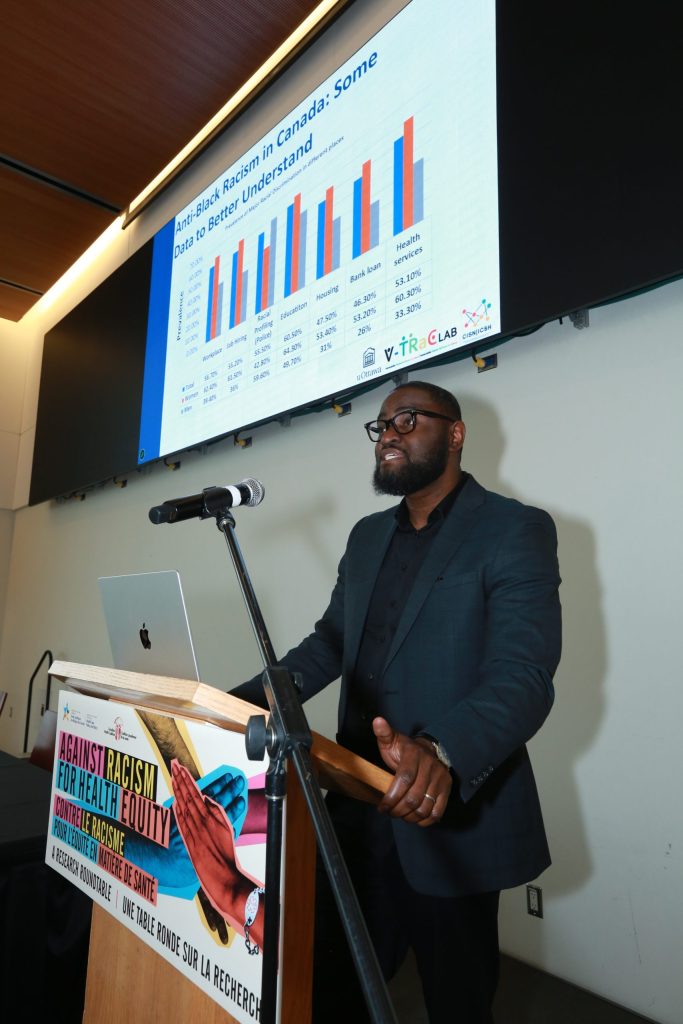
The first panel address race-data gaps in Canada’s health care system. Among the panelists were Cecilia Amoakohene who argued for data collection being paired with clear governance and accountability mechanisms to support health equity for Black women.
A recent Canadian Medical Assocation Journal study found Black Canadians face a 66 per cent higher risk of severe maternal morbidity compared to white Canadians.
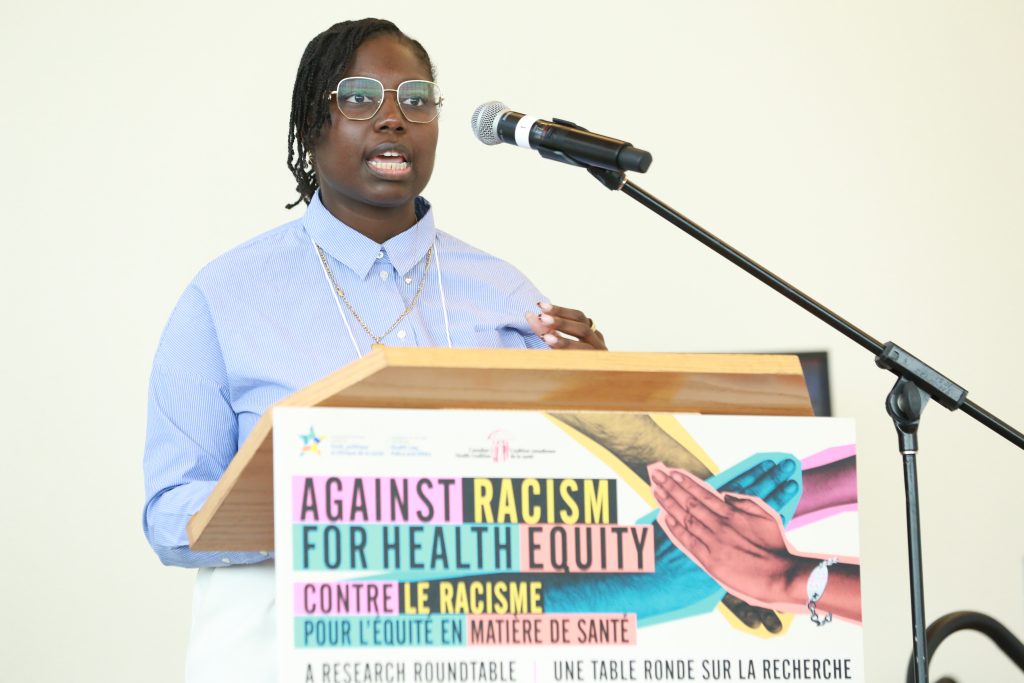
Mona-Lisa Amam Odukoya shared her own experiences with endometriosis before turning to her research on the diagnostic inequities affecting Black women with endometriosis. She argues that diagnostic inequity is not only a clinical problem involving whose pain is believed and investigated; it is also a data-governance problem involving what institutions choose to measure, analyze, and disclose.
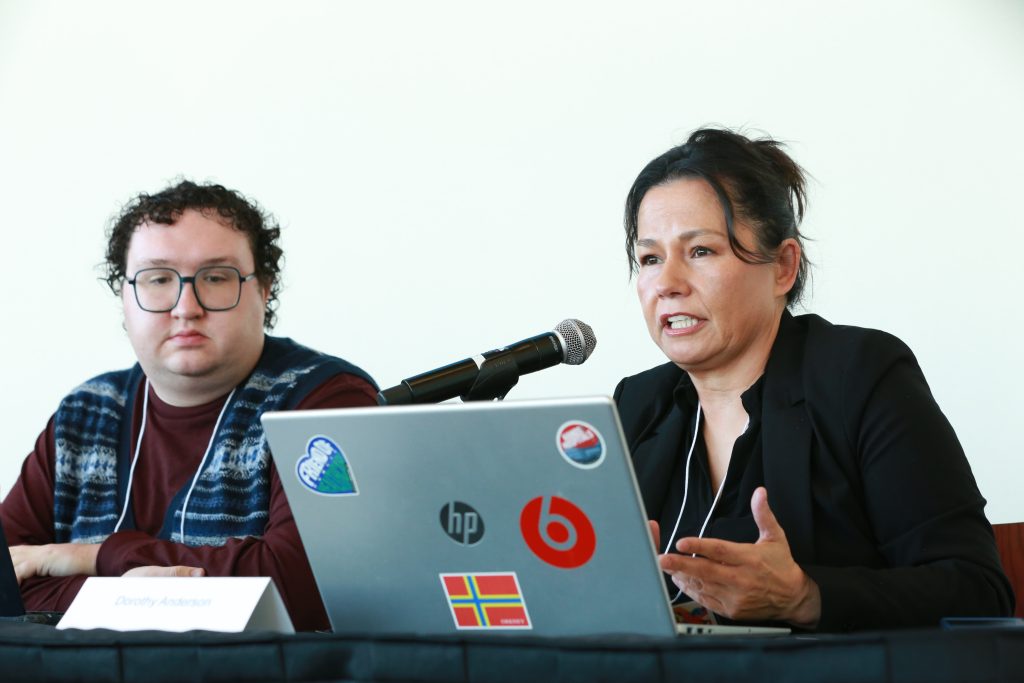
The second panel of the morning dealt with anti-Indigenous racism and health care. Dorothy Anderson traveled from Gift Lake Métis Settlement in northern Alberta to address the roundtable. Anderson drew attention to Alberta’s move toward a more privatized, two-tiered health system, alongside legislation such as the Compassionate Intervention Act and how it risks equitable access to care, cultural safety, and self-determination of Métis Settlement members who must rely almost entirely on Alberta’s health system.
Owen Cober with Ontario Native Welfare Administrator’s Association and Marc-André Gagnon, a professor of public policy at Carleton University, shared their research on the barriers that First Nations individuals face when accessing prescription medications in Ontario. Their research shows that many of the barriers in the system constitute what they call an ongoing form of medical racism. They recommend First Nations have greater control over their health care.
The afternoon panels dealt with newcomers, migrants and refugees and their access to health care. The research roundtable is timely as Alberta Premier Danielle Smith floats the idea of charging health care fees to temporary residents.
Chris Ramsaroop, Justicia for Migrant Workers, Vasanthi Venkatesh, an Associate Professor of Law at University of Windsor, and Taneeta Doma, the staff lawyer at the Migrant Farmworkers Clinic, spoke about the thousands of racialized workers from the Global South who come to Canada every year under a system that ties health care access to their hazardous farm employment. They highlighted how dangerous travel between farms in Ontario is for migrant workers. Eight workers died on Ontario roads this past summer alone.
Tragically, on the night of the roundtable, on Oct. 29, two more migrant agricultural workers were killed when a jeep hit them while they were walking on a road in Kingsville, Essex County, Ontario. The men, ages 25 and 27, were from Guatemala.
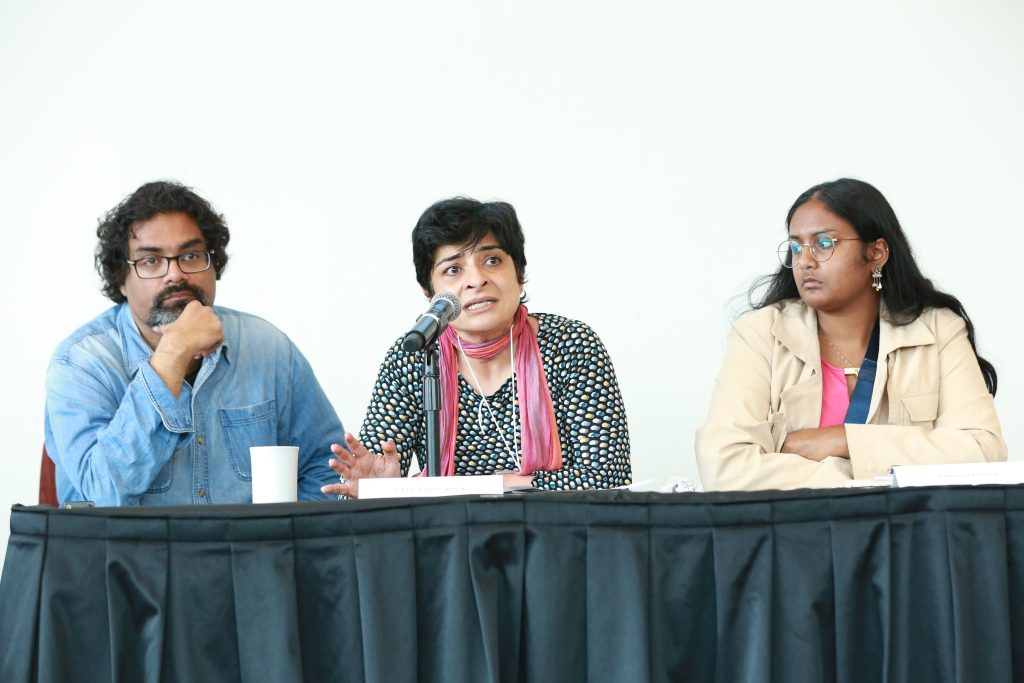
access to Canada’s health care system at the research roundtable. Photo by John Major.
Dr. Parisa Rezaiefar was once herself a refugee and today she is a doctor who provides health care to refugees and participates in research to advance refugee health care. She is especially concerned about recent cuts to Canada’s Interim Federal Health Program (IFHP), including a 30 per cent co-pay and a 10-session annual cap on mental health counselling, that further limit access.
Dr. Rezaiefar’s study interviewed 31 refugees in Canada, 53 sponsors, and 49 providers in Canada and the U.S. The research participants reported serious health concerns among refugees, including post-traumatic stress disorder, compromised mental health due to racism, chronic pain, diabetes and reproductive health needs, many of which were unmet.
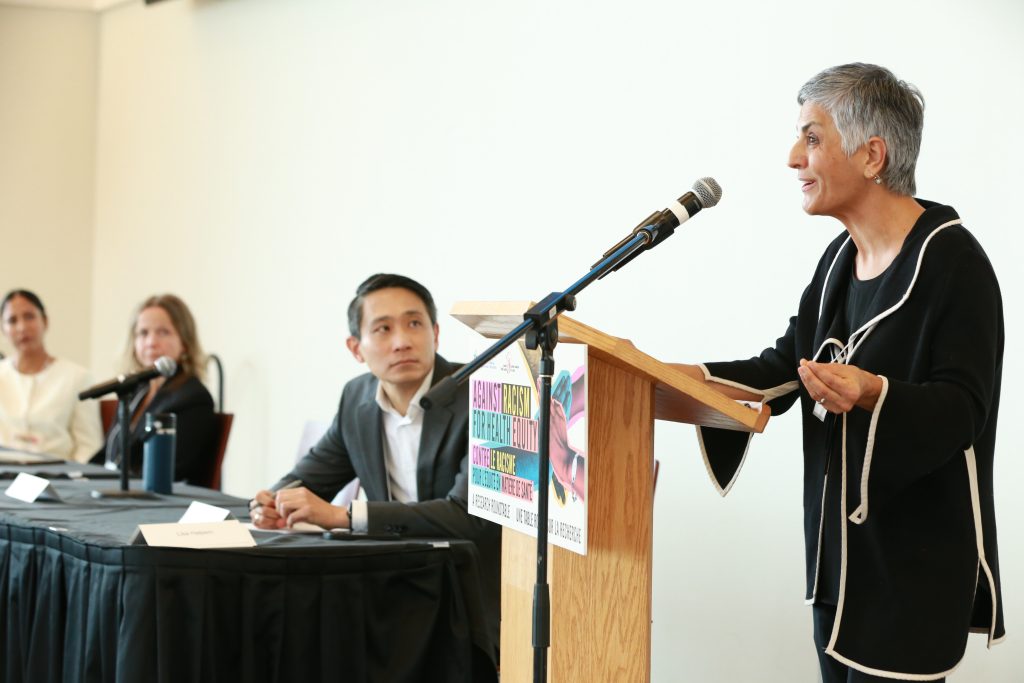
Dr. Bolu Ogunyemi, the first Black president of the Canadian Medical Association, delivered the second keynote address. He joined the roundtable from where he is based in St. John’s. He spoke about CMA’s initiatives on addressing racism in health care. He shared that racial disparities in dermatology led to him becoming a dermatologist.
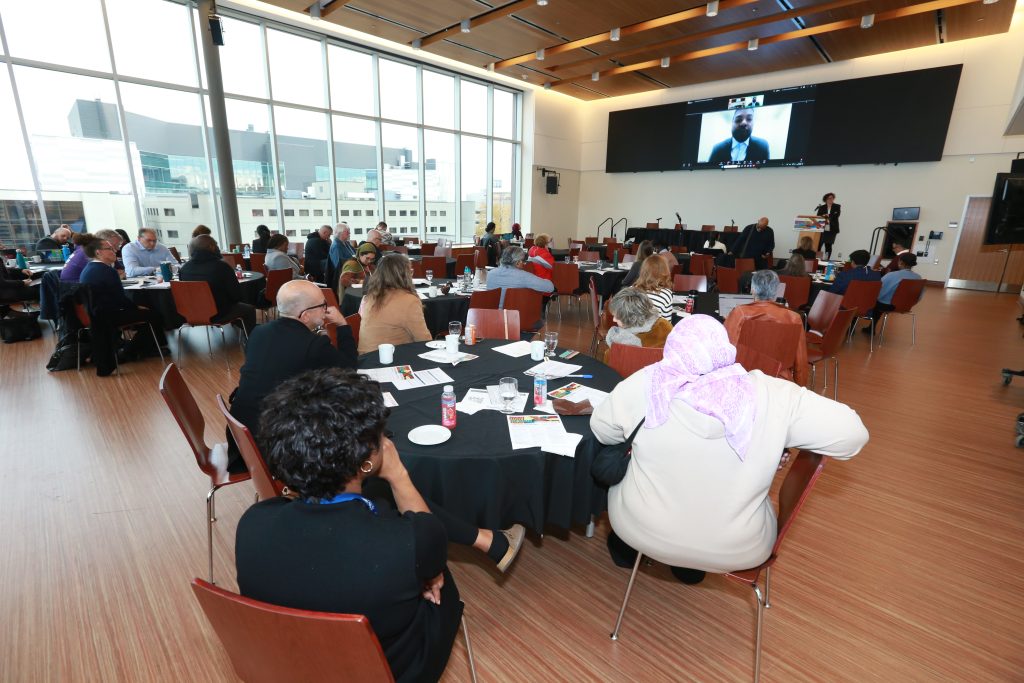
The last panel of the day involved the sharing of anti-racist initiatives by unions, nurses, health care practitioners and lawyers that attempt to advance health equity and justice.
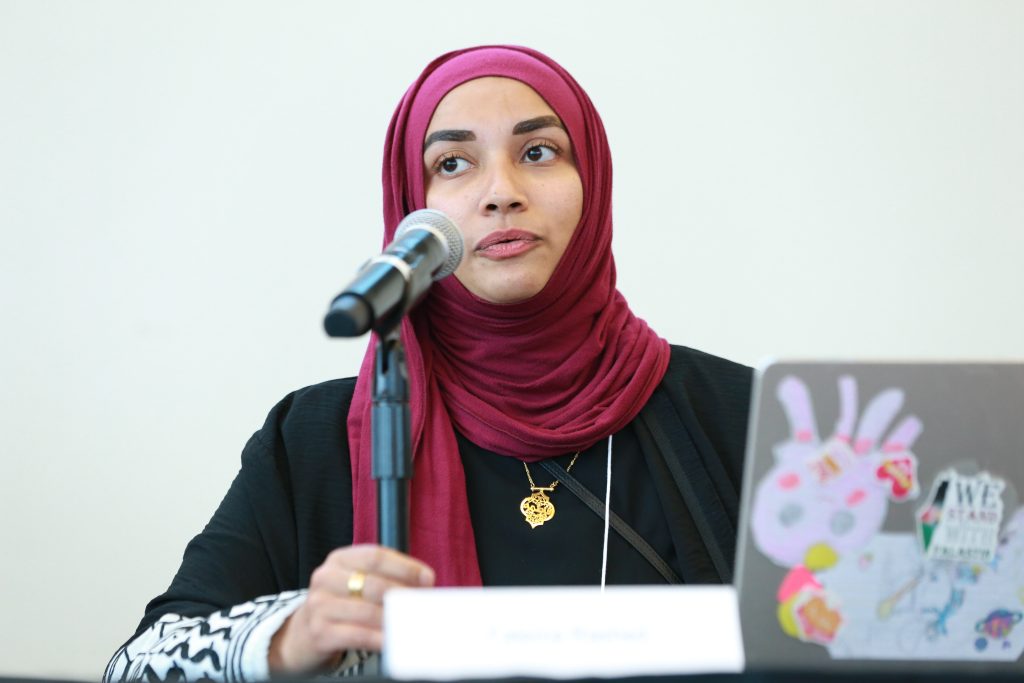
Fatema Rashed is a registered nurse and granddaughter of refugees. Today, she explores the intersection between colonialism in health care, racism, health disparities, and nurse-led advocacy efforts to support asylum seekers and refugees. She pointed to racialized nurses in Canada, such as Jean Cuthland Goodwill and Ruth Bailey, leading the way in advancing health equity, and inclusivity.
Her preliminary findings indicate the absence of organizational policies for interpreter services, inflexible patient lateness policies, doctors refusing care to patients without OHIP, and insufficient support coupled with negative attitudes from health care workers toward asylum seekers and refugees.
Marcus Zacharia is a pharmacist and works at the Ottawa Newcomer Health Care Centre as a multicultural health navigator and interpreter. He argues that health systems often perform welcome while denying newcomer patients full dignity, agency, and credibility. He calls on researchers to treat interpretation, navigation, community-resource literacy, and administrative workflows as core components of health equity infrastructure. He also asks how anti-racism research can better include the knowledge
of navigators, interpreters, community workers, and newcomer patients themselves.
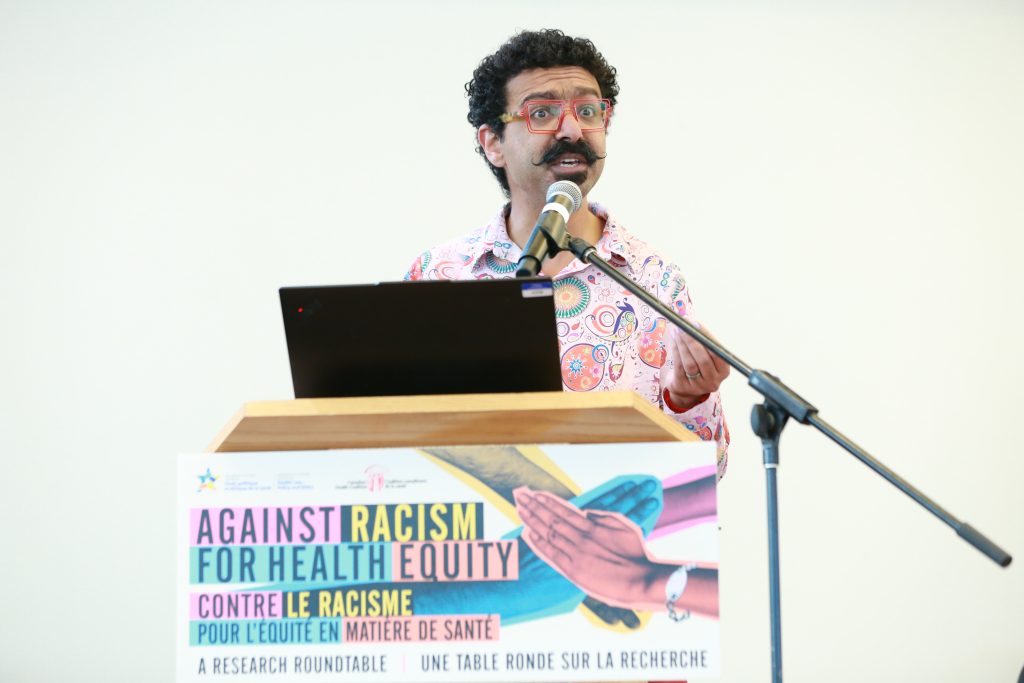
Dardia Garcelle Joseph is with the St. Michel Legal Clinic. She made the case for access to justice being treated as an essential component of health equity. To eliminate medical racism and promote genuine anti-racist care, Joseph argues that legal, community and health sectors must work together to ensure fundamental rights are upheld.
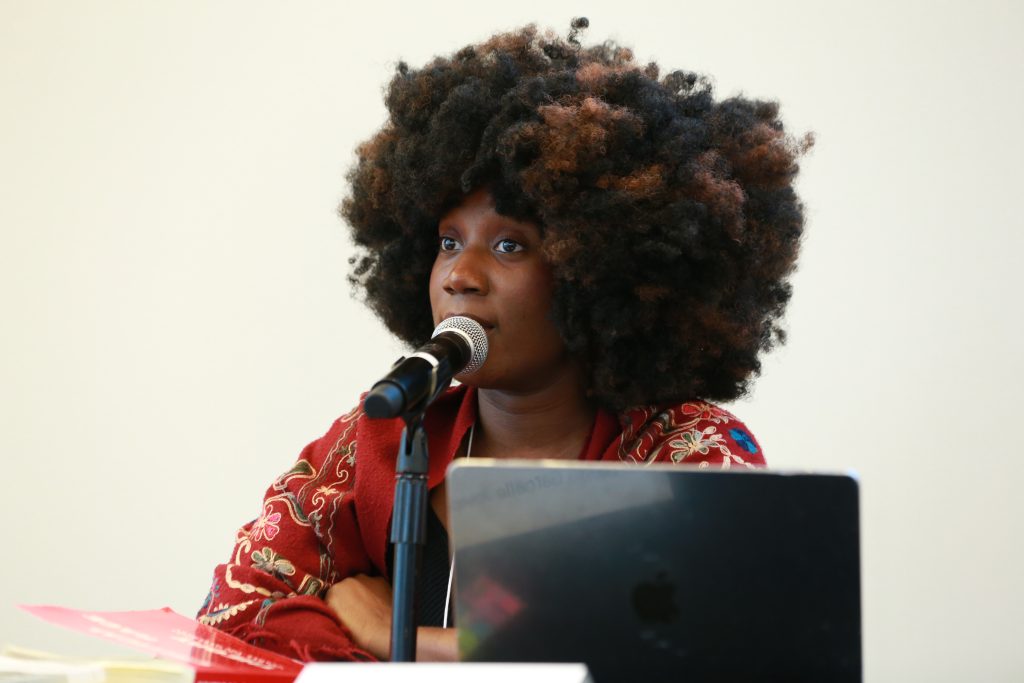
Watch for details of next year’s research roundtable by the Canadian Health Coalition and University of Ottawa Centre for Health, Law, Policy and Ethics.
The Canadian Health Coalition will continue to work on addressing systemic racism in health care. Up next is a webinar launch of a report on migrant worker access to health care in Canada. Register here.
The University of Ottawa Centre for Health, Law, Policy and Ethics convenes public events on timely health care issues. On Friday, Nov. 6 at 11:30 AM-1:00 PM ET, the Centre will host a talk with Dr. Joanne Liu, former international president of Doctors Without Borders, on her new book, Ebola, Bombs and Migrants at the University of Ottawa’s Fauteux Hall, Room 227. More information here.